


Is your team managing your mood or solving real problems?
When was the last time you sat on bad news because you didn't know how your boss would react?
You probably lost sleep over it, running through scenarios in your head and picturing the exact moment their face went red or they fell silent.
Let's be honest: neither is ideal.
Early in my career, I got the same advice many of you did: never let them see you sweat, keep a poker face, bottle up your emotions, and always look like you know what's going on.
My mentor Matt Church calls that kind of guidance "well-meaning bad advice," because it turns composure into a performance.
Recently, I had the opportunity to lead a powerful workshop at The Second City in Toronto. It is the training ground that produced comedy legends like Catherine O'Hara, John Candy, and Mike Myers.

If anyone understands how to perform a scene, it is an improv professional!
But when leaders treat composure like a movie scene, everyone around them can see right through it. After all, we aren't as good at acting as we think.
Faking it through a challenge doesn't create safety on your team; it actually damages your credibility.
Composure is an essential leadership skill.
But staying composed isn't about being stoic or detached like we are often led to believe.
In Green and Maister's trust equation from The Trusted Advisor, trust comes from credibility, reliability, and intimacy, divided by self-orientation.
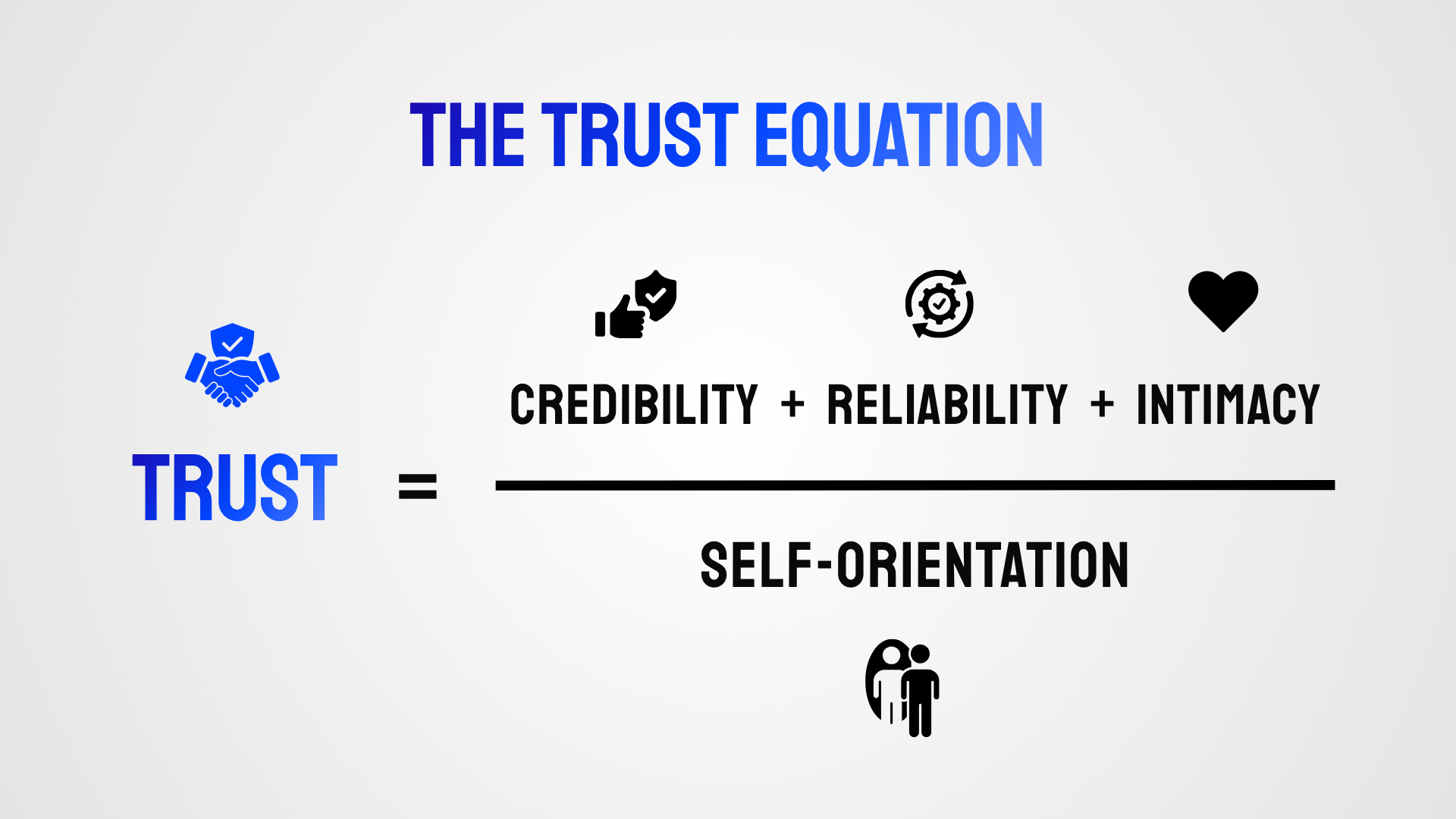
Volatile leaders destroy intimacy because people brace for how they'll react.
But detached, robot-faced leaders can damage intimacy too.
When people can't read you, they stop being honest with you.
If you want great results from your team, composure is one of three foundational anchors, alongside attunement and consistency.
The Three Dimensions
Composure operates on three distinct levels:
Within me: My ability to stay emotionally regulated, even when things go sideways. This is the difference between reacting emotionally and choosing the right next response in the moment.
Between us: Staying engaged without getting defensive or weaponizing emotions. I handle the situation and conversation directly and calmly so those around me don't have to walk on eggshells.
Across the system: Acting as a thermostat, not a thermometer. Thermometers tell me the temperature in the room; thermostats set the climate. That's real leadership, regardless of the position.
Wharton researcher Sigal Barsade showed us that emotional contagion happens automatically. People register and mirror your nonverbal cues, like your tone, your posture, and your energy.
When you show up anxious or amped up, you inject that panic directly into the people around you.
Composure is about refusing to transmit your wobbly state to the people in your orbit.
This protects their bandwidth so they can solve the right problems instead of simply reacting to you.
Composure anchors your agency and creates the conditions for agency in the people around you.
We all need more of that.
It gives you the space to choose the right level of emotional intensity to meet the moment, rather than transmitting a wobbly, reactive state across your organization.
What’s Emerging This Week
(Putting it into practice)
WITHIN: What are your top three “trip wires”? Those external things that pull us right into the weeds. It might be a last-minute request, disappointing feedback, or just someone's name (you know who they are!) on your phone. Bring some awareness to what is causing you to wobble.
BETWEEN: Take a few minutes to consider what it might be like to work with you lately. Feel free to think about someone who really frustrates you. Really try to get into the other person's shoes for a while. Then, what might you need to shift between you two to steady the waters?
That's a great place to start, and I can't wait to hear how it goes!
With intention,
Scott
P.S. If people on your team are spending more energy managing your mood than solving real problems, or if your exec meetings feel like everyone is nodding and holding their breath, let's grab coffee or hop on a call.
That's the work I do with leadership teams every week.
Just email me at s@scottschultz.co, and we'll find 15 minutes to help you shift in the right direction.
Prefer to get EMERGENCE straight to your inbox? Subscribe Here
Catch every episode on YouTube: https://www.youtube.com/@scottschultzcsp
Explore Scott’s Frameworks: https://www.scottschultz.co/thought-leadership